
01908 6998020845 899 4400 | 01908 699802Tel 01908 699802
Welding Cast Iron
Welding Cast Iron has quite a few potential pitfalls, but if done correctly, it’s not difficult.
Why is Welding Cast Iron problematic
The key reason why welding cast iron can be problematic is the high carbon content. During the welding process, this carbon migrates into the weld metal and/or the heat affected zone adjacent to the weld metal, causing elevated hardness/brittleness. This is how Cast Iron gets its reputation for post weld cracking.
Process for Welding Cast Iron
Gas Welding heats the Cast Iron slower than Arc based processes and the flame is lower temperature than an arc. This means Carbon migration is not normally a problem. Use of a proprietary Cast iron Gas Welding rod is important. The only real downsides to Gas Welding Cast Iron is the amount of heat needed if components are large. Gas Welding is also a slow process.
Arc/Stick Welding is, arguably, the best all-round process for Welding Cast Iron, provided the correct welding rods are used. Cast iron Welding Rods have a special Graphite rich flux, this graphite chemically ties up the Carbon in the Cast Iron, limiting migration into the weld metal and heat affected zone. There are two common types of Cast iron Welding Rod, Ferro-Nickel and Pure Nickel. Ferro-Nickel are typically 53% Steel and 47% Nickel. Ferro-Nickel Rods are cheaper than pure Nickel and are ideal for welding Cast Iron to Steel. Pure Nickel will produce a softer, more malleable weld deposit. I would advocate using Ferro-Nickel, unless the job specifically requires Pure Nickel.
Mig Welding is, in my opinion, not a great way to weld Cast Iron. Whilst there are specialist Flux Cored Wires available, unless you have a repeating application that you can create a procedure for, I would not advocate Mig Welding Cast iron.
Tig Welding is not considered a suitable process for Welding Cast Iron. An open arc process such as Tig offers no opportunity to mitigate Carbon migration.
Welding Techniques
Gas Welding - There are no specific techniques that need to be deployed.
Arc/Stick Welding - All of the following are important:
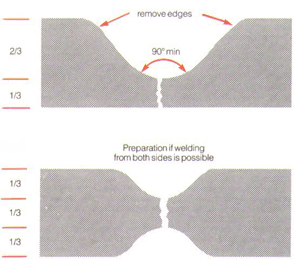
- Prep the job with a ‘U’ shaped groove, avoid sharp corners as this can lead to heat build up which will exacerbate carbon migration.

- Use the correct type of welding rod.
- Ensure the component is AT LEAST at room temperature, adding a small amount of pre-heat will help, but you only need the component to be warm to the touch.
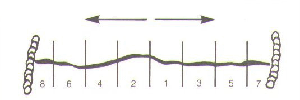
- Limit the amount of welding done in one run. As a rule of thumb, do not put down a continuous run that has a length greater than 10x the diameter of the welding rod being used. Having said that, it’s ok to put down multiple runs in different parts of the component (see graphic in next item). Eg, if repairing a 300mm crack with a 3.2mm rod, you can weld a run of 32mm, then do another 32mm run in another part of the crack. Avoid letting the weld area get too hot, this is the purpose of short runs.
- If you’re repairing crack, run a bead across each end of the crack to avoid the crack spreading further.
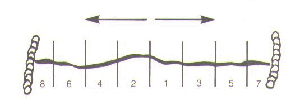
- Keep the welding rod vertical, not at an angle, like you would for most stick welding.
- Don’t expect to weld cast iron quickly, the key is to take you time and do it properly.
I hope you found this blog article about Welding Cast Iron useful, if things work out well for you, please feel free to post some pictures of your achievements on our Facebook Page
Please let me know what you thought of this article by leaving a comment. Don’t worry, your email address won’t be added to a database or shared and you won’t receive any unsolicited email.
Cheers
Graham
Fuzz Townshend - Car SOS
I first met Fuzz Townshend when he was a journalist at Practical Classics magazine and got involved in several projects with him including a Mig Welding project that saw Fuzz choosing one of our Mig Welders.
Since then, a few years have passed and now Fuzz co-presents Car SOS on Channel 4, where our Mig Welder is often seen, albeit in the background, well the show is about cars ?
A couple of weeks ago Fuzz got back on touch as he was seeking a Tig Welder for use in the next series of Car SOS. After a chat on the phone we decided the best machine for the job was the Cross-Arc 200 AC/DC
So Yesterday, my lovely Wife and I drove up to the Car SOS workshop in Oldbury, West Midlands, to deliver the machine and run through the basics of getting up and running with this excellent Tig Welder.
Fuzz and the guys intend to use the machine for some of the finer car welding work where the greater control and quality of Tig Welding can be exploited. Fuzz commented that “as some of the vehicles in the forthcoming shows have Aluminium bodies, the AC function of the Cros-Arc 200 AC/DC Tig Welder will come in very useful”.
For those who have not seen the show, the show synopsis is as follows:
“Overhaulin’ ” fans can relate to the premise of “Car SOS.” Both document the done-in-secret car restorations for needy or down-on-their-luck owners, with the main difference being the former show is based in the U.S. and the latter in the U.K. “Car SOS” is driven by hosts Tim Shaw and Fuzz Townshend, whose combined talents — Shaw is parts manager, and Townshend is master mechanic — rescue much-loved classics from rusty retirements. With some grease, graft, expertise and care, the SOS team creates jaw-dropping motor makeovers.
I appreciate this article is a little self indulgent, but I hope you still found it interesting.
Please let me know what you thought of this article by leaving a comment. Don’t worry, your email address won’t be added to a database or shared and you won’t receive any unsolicited email.
Cheers
Graham
Setting up Oxy Acetylene Kit
Setting up Oxy Acetylene Kit is not rocket science, but it is important to do it correctly.
Setting up Oxy Acetylene Kit - the basics
- Oxy Acetylene fittings consist of a concave Female sealing face on one component and a Male ball shaped sealing face on the other. A Nut clamps these faces together to form a gas tight seal.
- Threads are not designed to be gas tight as gas will not come into contact with the threads.
- NEVER use PTFE tape or any other form of thread sealing product when setting up gas equipment.
- DO NOT over tighten joints, they only need to be nipped up, take special care if you’re using a large adjustable spanner as it’s easy to over tighten nuts if you’re using a spanner that was designed for use on the Forth Bridge assembly 🙂
- Combustible Gas fittings (Propane, Acetylene etc) will be LEFT HAND THREADS, this will be indicated by little nicks in the corners off the nuts.
Setting up Oxy Acetylene Kit
- Visually check the inside of the thread and seat of the Gas Cylinder outlet, you’re looking for dust, debris or scratches on female sealing face.
- Fit the Gas Regulator to the Gas Cylinder
- Fit the Flash Arrestor to the Regulator - Note, in North America, Flash Arrestors are fitted to the Torch, but here in Europe we fit them to the Regulator.
- Fit The Hose to the Flash Arrestor. Note, it may be that both ends of your hose are the same size nut, allowing the hose to be fitted the wrong way round. The Torch end has a Check Valve (one way valve), if the hose is fitted the wrong way around, you will not get any gas out! Look at both ends of the hose, if the nuts are the same size, look behind the nut, if there is 5-10mm of brass bar between the back of the nut and the start of the hose, that will be the Check Valve and thus the Torch end of the hose.
- Fit your Gas Gun to the end of the Hose.
Lighting after setting up Oxy Acetylene Kit
- Check the valves on the Torch are closed.
- Check the Control Knobs on the Regulators are unscrewed to the point where it is loose and floppy.
- SLOWLY open the Gas Cylinder Valves.
- Open the Oxygen Valve on the Torch ½ a turn (no gas will come out yet).
- Screw the Oxygen Regulator Control Knob in until you feel it start to go stiff, continue turning while watching the Delivery Pressure Gauge on the Regulator, continue turning the Regulator Control Knob until the desired pressure is reached.
- Turn OFF the Torch Valve.
- Repeat steps 4-6 with the fuel gas.
- Check all joints for leaks with a proprietary leak detector product.
- Imagining the control knob is the face of a clock, open the fuel gas Torch Valve around 5 minutes.
- Light the gas with a Spark Lighter (Cigarette lighters should be avoided as they can be dangerous)
- Slowly open the Oxygen Torch Valve until the desired flame is achieved.
You’re now ready to get stuck into the job! Always remember to use eye protection, even if you choose not to wear darkened goggles, you should at least wear clear goggles, as there is always a risk of sparks.
I hope you found this blog article about setting up Oxy Acetylene Kit useful, if things work out well for you, please feel free to post some pictures of your achievements on our Facebook Page
Please let me know what you thought of this article by leaving a comment. Don’t worry, your email address won’t be added to a database or shared and you won’t receive any unsolicited email.
Cheers
Graham
We accept the following methods of payment

